Autores Proeminentes



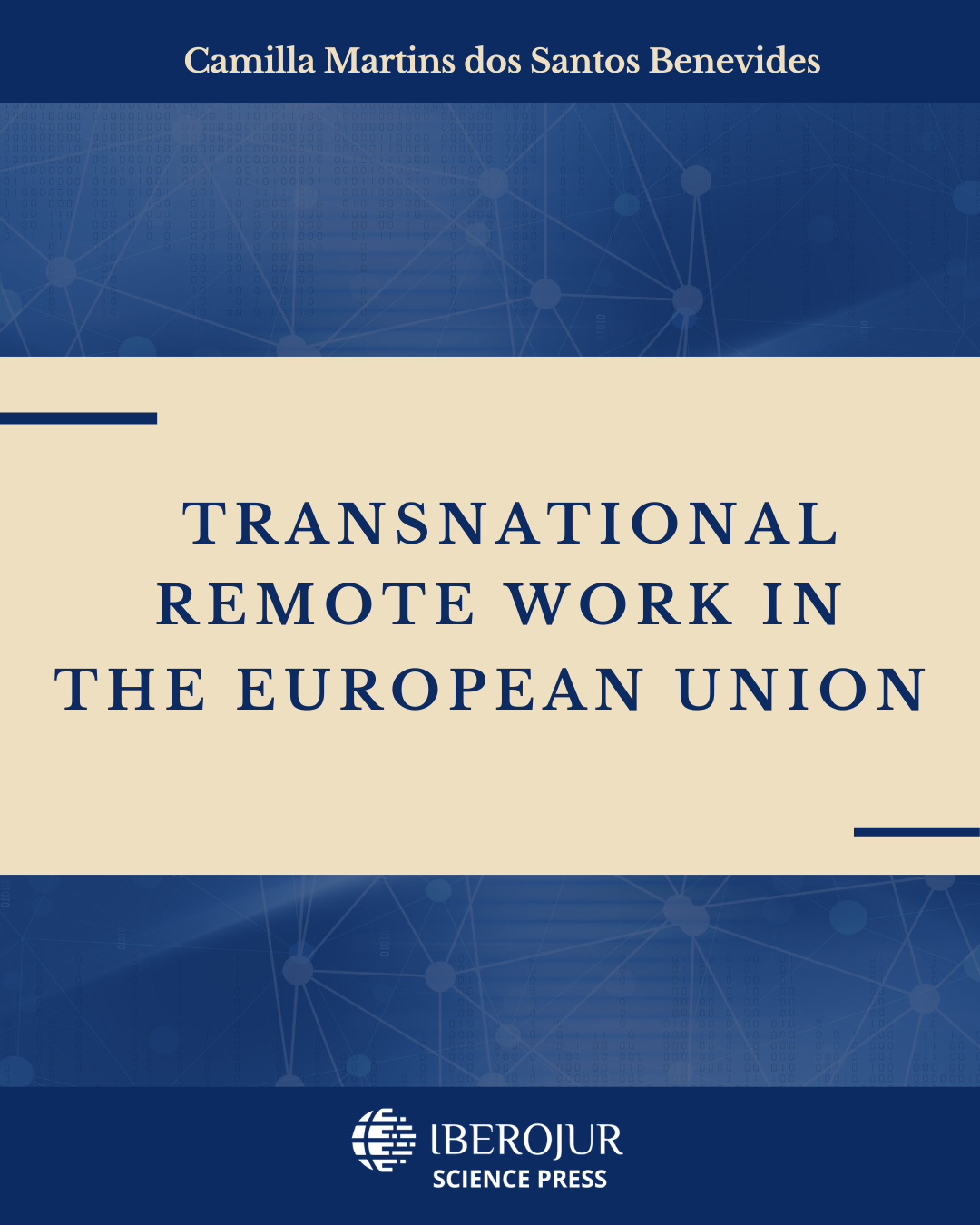
I would like to thank my friend, Professor Dr. Camilla Martins dos Santos Benevides, for the honor of writing this preface to her doctoral thesis at Università degli Studi di Roma I, “Sapienza,” in joint supervision with the Federal University of Santa Catarina.
I met Camilla in 2012 during the Specialization Course in Labor Law and Procedure that I coordinated at PUC Paraná, and from that moment, I noticed that she stood out among the other students. I participated in her Master's Dissertation defense in Human Rights at the same institution, where she received the highest marks with merit. Soon after, she and her husband expressed their interest in living in Rome and pursuing a doctorate there.
In a short time, they were already in Rome and enrolled at Sapienza University, consistently achieving top marks and excelling in scholarship competitions. Additionally, she stands out in her legal practice and consultancy work both in Brazil and abroad.
She has organized several events, both in Brazil with UFSC and the University of São Paulo (USP), Faculty of Law in Ribeirão Preto, and abroad in Spain, Italy, and Portugal.
Camilla continues to be a role model for many other students, including two who are following in her footsteps in Italy and will soon defend their respective doctoral theses: Professors Marlus Eduardo Faria Losso and Leonardo Andreotti Paulo de Oliveira, who are also my advisees in Brazil.
The objective of this work is "to construct an interpretative framework regarding remote work in the European Union that aligns with existing jurisprudence while also being attentive to practical realities in a transnational context."
Certainly, the restrictions urgently brought about by the declaration of the COVID-19 pandemic accelerated fully remote work, leading to special legislation for these workers.
In the first chapter, Camilla discusses the evolution from the Industrial Revolution to work in the digital age, analyzing the concept of the metaverse and
addressing digital platform workers (CROWDWORK), concluding with statistical data on the use of fully remote work in the European Union.
The sources of Community Labor Law are explained in the second chapter, beginning with an analysis of the competencies of the European Union and the Member States. The jurisprudence of the European Court of Justice is addressed concerning the sources of Labor Law. Several Directives related to remote work, directly or indirectly, were studied, not only in relation to the worker but also regarding their private life.
The third chapter addresses transnational remote work in the European Union, focusing on the legislation applicable to the international individual employment contract, mainly under Regulation 593/2008, which is binding on all Member States that have ratified it.
Social dumping, characterized by companies choosing to hire employees in a specific country where national laws are less protective, is analyzed in part of this chapter, examining the promotion of decent work.
The decision of the Court of Justice of the European Union regarding the worker's residence forum is analyzed, indicating the public policy limit in the application of Private International Law rules.
The last chapter adopts an interdisciplinary approach, analyzing fully remote transnational work in the European Union, focusing on issues related to privacy, health and safety of online workers, social security law, and tax law.
Camilla believes that it is important to create complementary legislation in the European Union to apply to these new modes of fully remote service provision, considering both workers and companies, to achieve a transparent and fair system. It is hoped that this brief overview of each chapter has sparked the reader's interest in understanding the text in its entirety. This work will certainly represent an important theoretical milestone in the deepening study of international labor standards in our country.

Esta obra está bajo una licencia internacional Creative Commons Atribución-NoComercial-SinDerivadas 4.0.


Autores
Termo de Uso
Política de Privacidade
 O licenciante não pode revogar estes direitos desde que você respeite os termos da licença.
